New alcohol insights, thanks to 1.7m participants |
How much alcohol do we drink every week? And how do our drinking habits change depending on our age or income? We analysed data from almost 1.7 million Our Future Health participants who had completed their health and lifestyle questionnaires. It amounts to one of the largest surveys of alcohol intake ever carried out in the UK.
|
The analysis revealed some fascinating insights, such as: |
- younger generations are drinking less than older generations
- less than 1 in 50 people aged 18 to 29 drink every day, compared to 1 in 5 people aged over 80
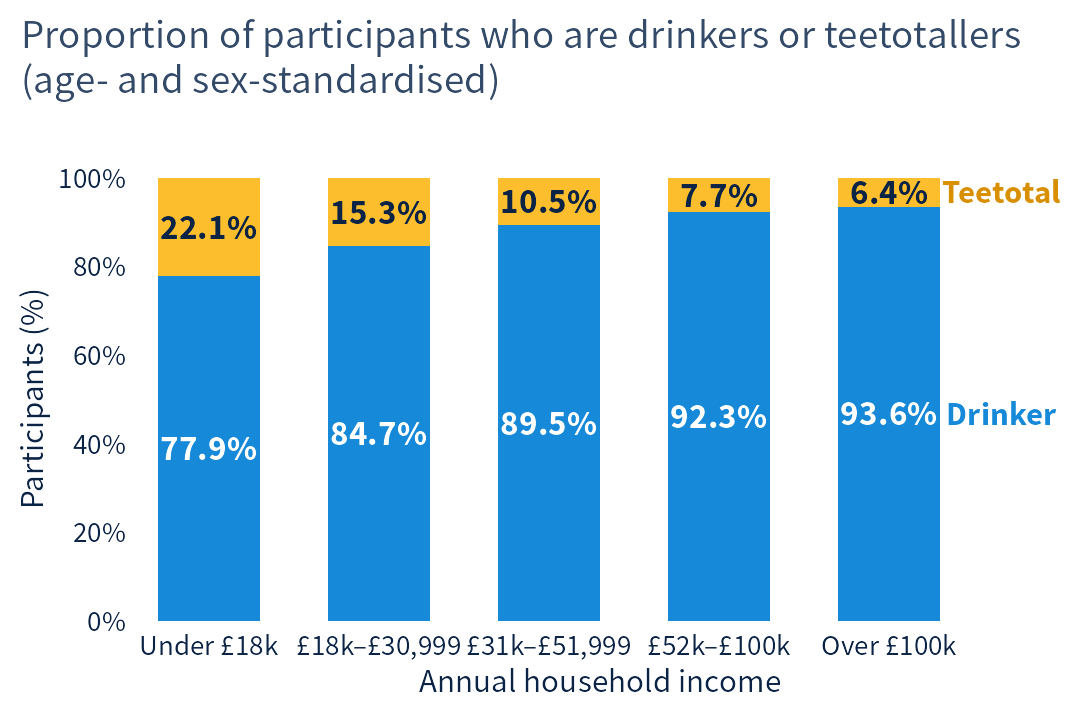
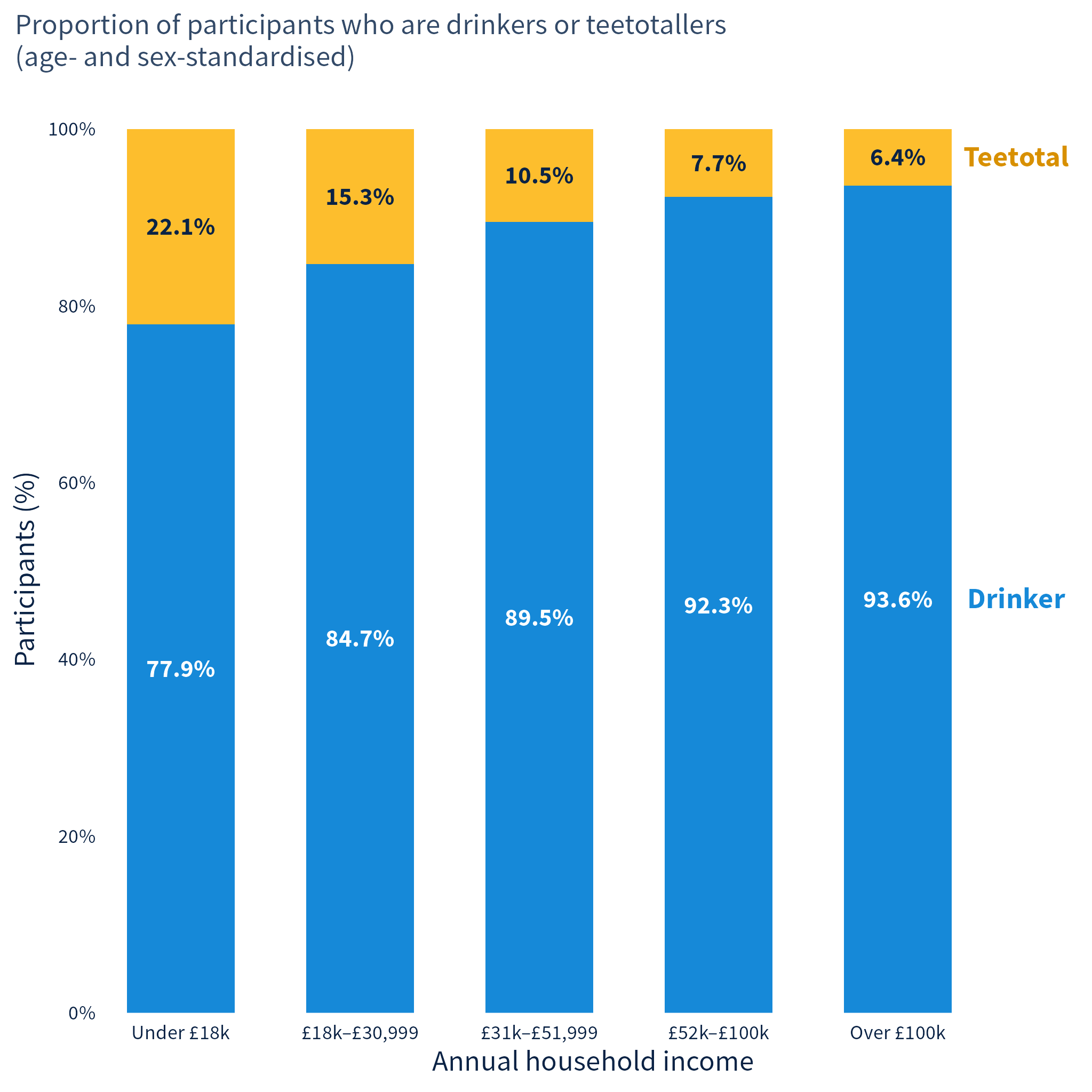
- the more people earn, the more they tend to drink
- women are lower risk drinkers than men
|
You may have seen some of our findings reported in the national news. Now you can read our findings in full – and see how your drinking habits compare to people like you. | Your data reveals the hidden burden of high blood pressure |
|
|
Blood pressure is often called a ‘silent killer’. It raises your risk of serious conditions, such as heart disease, stroke and vascular dementia. The good news is that Our Future Health participants are helping researchers to build a clearer picture of who is affected. Researchers from the University of Oxford analysed data from 1.4 million participants. They found that: |
- more than 1 in 3 (37%) participants had high blood pressure
- 59% of those with high blood pressure had never received a diagnosis or been prescribed medication for it
- 1 in 6 participants aged 18 to 39 had high blood pressure
|
|
|
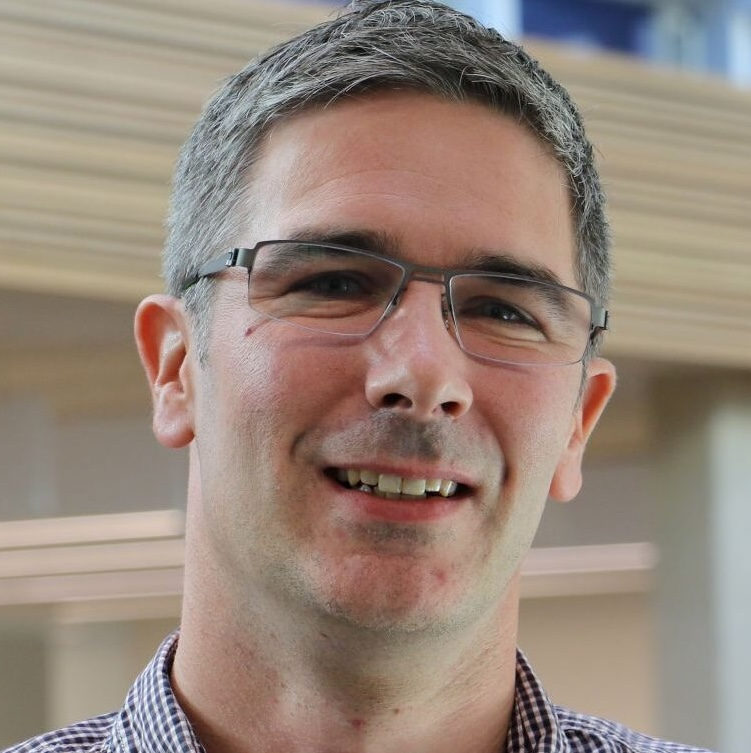
| Dr Iain Turnbull, our Deputy Chief Health Officer, was part of the research team. He explains what the findings could mean for healthcare in the future. |
|
|
More studies you're making possible |
Thanks to participants like you, 87 studies are now looking at Our Future Health data, to explore some of the biggest questions about health and disease. Here’s some of the new studies that have been approved since our last newsletter. |
|
|
Researchers from the University of Bristol are trying to find better ways to predict who is most at risk of pregnancy and birth complications. (Read more) |
|
|
Scientists at Washington University in St Louis want to better understand why cancer rates are rising in young people. (Read more) |
|
|
Parkinson’s and insulin resistance |
Researchers at Imperial College London hope to identify cases of Parkinson’s disease that potentially could be treated with diabetes medication. (Read more) |
|
|
We’ve worked with 2 further research teams to send invitations to some of our participants. The invitations offer an opportunity to take part in additional research. We’ll be sending more of these in the future. They could include invitations based on your health and lifestyle questionnaire, genetic information from your blood sample, and measurements from your appointment. If an invitation contained new information about your health, we would always check with you first before sending it. If you don’t want to receive the information, we won’t send the invitation. We won’t tell you anything you don’t want to know. |
|
|
Tell us what you think of this newsletter |
Complete this short survey to tell us what you think of this newsletter and how we can improve. |
|
|
Volunteer Voices: Living through an early cancer diagnosis |
|
|
| At just 28 years old, Dan Godley was diagnosed with advanced pancreatic cancer and told he had less than 18 months to live. Almost 4 years later, his scans are cancer free. Dan spoke to us about his shock diagnosis and remarkable recovery – and why his experience led him to take part in Our Future Health. |
|
|
| Karen Fraser was diagnosed with papillary thyroid cancer aged 30. But just 6 weeks after Karen was given the all-clear, her mum had a stroke. Karen spoke to us about her cancer journey and how taking part in Our Future Health helped her to find hope after the loss of her mum. |
|
|
Change to our data release schedule for approved researchers |
We’re changing how often we add participants’ data to our Trusted Research Environment (TRE). The TRE is a secure computing environment where approved researchers analyse data for their work. In the past, we’ve added or withdrawn participant data every 3 months. From now, we’ll add or withdraw participant data every 6 months. Members of our Public Advisory Board and our Involvement Network supported us in making this decision. The update will allow us to improve data security and deliver better and more valuable data sets to approved researchers, so we can power more groundbreaking health research. |
We're pleased to announce that 5 organisations have recently joined us as charity partners. |
- Behçet’s UK is the UK’s primary charity for people with Behçet’s disease, a rare condition causing inflammation of blood vessels, including those who are yet to be diagnosed.
- The British Thyroid Foundation is a charity dedicated to supporting people with thyroid disorders.
- Eczema UK is the UK charity for everyone affected by eczema.
- The MND Association is the UK’s leading charity for people with motor neurone disease (MND).
- Moorfields Eye Charity funds research into eye conditions to improve eye health and the lives of those affected by sight loss.
|
|
|
Thank you for being part of Our Future Health |
You've already completed everything we need from you right now. After your appointment and questionnaire, there’s nothing else you need to do. Your de-identified information is already being used by approved researchers in new and ground-breaking health research. What happens next? In the future, we plan to offer you the option to learn about your risk of developing some diseases, such as diabetes or heart disease. We may also invite you to take part in new research opportunities. Taking part will always be your choice, you can say yes or no. |
|
|
Our Future Health is a company limited by guarantee registered in England and Wales (number 12212468) and a charity registered with the Charity Commission for England and Wales (charity number 1189681) and OSCR, Scottish Charity Regulator (charity number SC050917). Registered office: 2 New Bailey, 6 Stanley Street, Manchester M3 5GS. Unsubscribe |
|
|
|